B.E. Civil Engineering is a 4-year full-time undergraduate engineering course deals with the construction, design, and maintenance of structures and works like tunnels, bridges, buildings, canals, waterworks, airports, sewage systems, waterways and canals, highways and railroads, dams and powerhouses, sewage disposal system, water treatment, ports, harbors, docks, etc. B.E. Civil Engineering course introduces the elements of surveying with construction on applications for the construction process.
B.E. Computer Science is a 4 year undergraduate Engineering course deals with the construction, design, maintenance, operation of computer software and hardware. This course introduces the software and hardware aspects of both computer applications and computer design. The course explores the interaction between modern computer science and related technologies that have evolved design principles of engineering and mathematical into the developmental of modern computing systems.
B.E. Electrical and Communication Engineering (ECE) is a 4year undergraduate degree program , deals with the investigation and study of design, installation, manufacture, and operation of electronic tools a, d equipment, telecommunication systems, systems and machinery, radio, computers, and TVs used in the computer industry, hospitals, entertainment media, defence forces and in numerous other areas. The program provides a sound establishment for people wishing to seek a career in Electronics & Communication engineering, control systems, communications, sensor systems and robotics through an assorted scope of practical experience and theoretical skills, exhibited with regards to real applications and design expertise and experience.
M.Tech Structural Engineering may be a 2-year full-time postgraduate course which involves advanced study of components like Structural Mechanics, Finite Element Analysis, Structural Dynamics, Structural Reliability and Optimization, Reinforced and Pre-Stressed Concrete, Steel Structures, Design for Wind And Earthquake, Tall Buildings And Towers, Computer Applications In Structural Engineering, etc. Students are trained to implement such principles through different methods, in analyses of varied sorts of structures, and to guage force and displacement parameters of such structures.
M. Tech Textile Technology is a 2 year post graduate programcourse. Textile industry basically involves manufacturing of various types of fabrics, production of machinery, and planning and development of new technology. The curriculum is focused on smart textiles, nanotechnology applications, bio-textiles, engineering of functional apparel, and others. Textile Technology/ Engineering are a study of textile processing and its production. The engineering course is a combination of advanced principles of engineering and specific knowledge of textile equipment and processes. The course involves the application of scientific and engineering principles to the design and control related to all aspects of fiber, textile and apparel processes, their related products and machinery. These include natural and man-made materials, processing of materials with machines, safety and health, energy conservation, waste management and pollution control.
Ph.D in Computer Science and Engineering is a 3 year course. Student should have cleared a bachelor’s degree with Computer Science as a subject or equivalent to this degree from a recognised University. The study aims to develop a dynamic researcher which enables them to adapt according to the ever changing needs in the field of computer science in the years to come. Research activity spans a broad spectrum of Computer Science and Engineering subjects which include Algorithm Design ,Artificial Intelligence , Big Data ,Cloud Computing ,Computer Architecture ,Computer Graphics, Vision & Game Sciences ,Human Machine Interaction (HMI) ,Machine Learning ,Semantic Interoperation using Ontologies etc..
The PhD programme in Electronics and Communication Engineering (ECE) is a research-based programme. The research can be in any of the broad areas in ECE. The core strength of the institute is currently in the following core areas: signal/speech /image processing, VLSI and embedded systems, robotics, and communications. The mian emphasis of this programme is on a thesis. Work towards the thesis requires a good understanding the state of art in an area, problem formulation, original contributions based on analysis with sufficient mathematical rigour and validation. The research is expected to be of sufficient quality to be publishable in leading international journals and top conferences pertaining to an area of research.
Doctoral Degree in Civil Engineering at CU prepares students to acquire a systematic and critical understanding of a complex field of learning and specialised research skills in core aspects of Civil engineering to advance learning and/or professional practice. Areas of research includes Mining engineering, geomechanics, structural engineering, transport and traffic engineering, water resources and environmental engineering and many more.
B.E Textile Technology is a 4-year Under-graduate course, focus on creative explorations from concept to prototype developed through various stages of further explorations and refinement. The programme includes several interdisciplinary projects of designing textiles for Public Spaces/ Exhibition / interiors and for the automobile industry. B.Tech Textile Technology course structure include Design communication, Design education, Design management, Digital design, Emotional aspects of design and consumer behavior, Fashion design, Fashion retailing, Global operations management, International supply chain management, Textile design.
B.E. Silk Technology is a 4 year undergraduate engineering course which falls under the branch of textile engineering. It is defined as production of silk through various sources like silk worms and artificial sources including chemical treatments. Students are trained on the production of silk which is a fabric material, not only from silk-worms but also through artificial processes. They are also taught about the properties of the fabric, its manufacturing process, dyeing and treating the material, and finally how to convert it into the finished product for selling purposes.
M.Tech Highway Technology is a 2 year post graduate course which is a specialized brach of Civil Engineering. The course focus on techniques of planning and design of roads, bridges and drainage based on traffic and ecological studies. The students trained on construction & management of highways, pavement , preventative and remedial measures of pavement failures , newer technologies in highway technologies aswell. Highway technologies offer traffic safety services and equipment for the road repair , construction and maintenance including variety of concepts which utilize computers, telecommunication equipments & control systems.
Ph.D. in Textile Technology is a 3- 5 year doctoral course related to the field of Textile engineering. It includes all the aspects of textile industry like graphics, computing techniques, physics and chemistry laboratory, technical lab sessions, etc. The course emphasizes not only depth in fundamental textile engineering and science/mechanical engineering disciplines, but also an interdisciplinary approach to understanding technologies in which textile engineers and scientists can and should take a leading role. It is this combined emphasis on fundamentals, the ability to think and work outside ones area of expertise and the ability to frame complex problems that best defines this doctoral program. Students will propose a textile engineering and science problem of substance and will then develop a solution. Students must demonstrate the ability to apply scientific principles to meet engineering needs with due regard to social and economic factors and within a reasonable time constraint.


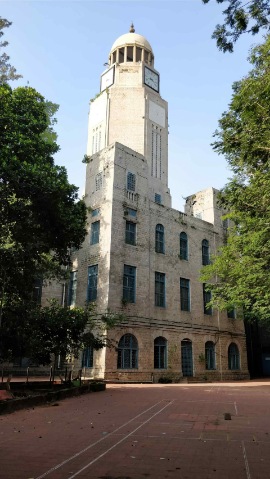
Govt. Sri Krishnarajendra Silver Jubilee Technological Institute, K R Circle, BENGALURU – 560001, Karnataka